Pages

Tuesday, September 17, 2013

Don't be the last fool to own a diamond

Diamonds are valuable - except for the last fool who owns it.

In a suite at a five-star Hong Kong hotel one Friday morning, a row of 64 pink, blue and red diamonds lay on display, each encased in individual boxes. A line of security guards outnumbering buyers eyeing the boxes, each guard appropriately armed with weapons that would bring down any one silly enough to think the unthinkable.

Chinese buyers wonder around the array of diamonds, each knowing that they share this honour with other privileged invited guests. By mid afternoon all 64 rocks are sold to a handful of buyers for an undisclosed amount of money.

China has the unenviable privilege of being the second largest diamond market in the world after America.

For a rock that has little or no intrinsic value and is in plentiful supply, it has created a US$80 billion industry in China, enough to buy the country of Kenya and mop up all the beautiful islands of Maldives at the same time.

If there is no intrinsic value and it is not scarce, then why are diamonds so valuable?

They are valuable simply because Gerold M. Lauck, from a New York advertising agency and Henry Oppenheimer from De Beers, told us so back in 1938.

Between Gerold and Henry, they invented the intrinsic value of diamonds.

The agency created one of the most powerful campaigns in the world successfully linking the value of love to the size of a rock. De Beers monopolised global production, the supply chain and severely restricted and controlled re-sell markets.

By mid to late 1940s the scene was set to price its products to whatever level the company deemed it to be.

Diamonds are indeed forever, as once bought you will not be able to re-sell it unless of course you can find a bigger fool to buy it from you. 

History is rigged with examples of individuals, companies and governments unsuccessfully selling their diamonds. The disastrous attempt by Israel to offload their US$850 million stockpile of investment-grade diamonds in 1970s was one example. After a long a exhaustive search, they found one buyer - De Beers themselves offering a steeply discounted price. Many dealers and investors fell into hard times as a result of this re-sell void.

Dealers all around the world have an unwritten rule not to buy diamonds from the public unless it is bought back at severely reduced price. Walk down Fifth Avenue New York with a diamond under your arms trying to sell it, would be a futile exercise as a London-based consumer magazine MoneyWatch found out with their decade long test diamond experiment. The magazine tried selling their gem-quality diamond bought 10 years earlier in London and New York, but no retailer nor dealer in either cities were willing to pay cash for it. One dealer was willing to do a diamond-to-diamond swap based on the dealer's valuation and the dealer was non-other than one of De Beers' own chains.

In short when you buy a diamond, you will never be able to realise the price you paid for initially. Many have tried selling and failed. Most simply resign to keeping their diamonds and live under the illusion that they have bought a valuable piece of junk. They have fallen into a value-trap that distills their love into a size of a 1gm rock and mortgaged part of their personal value systems to the whims of a multi-billion dollar conglomerate.

The diamond industry will make sure you do not sell your diamonds. They want you to keep it for good. Diamonds are indeed forever as there simply isn't a re-sell market. So buy diamonds by all means - just do not be the last fool to own it. 


Thursday, September 12, 2013

Fried rice is not spelled correctly

Isn't it time "Fried Rice" is spelled "Flied Lice?"

On a wet and cold Saturday afternoon, I chanced upon an old-time American TV series “Charlie Chan” created by Earl Derr Biggers, an American novelist and playwright in the 1930s. “Charlie Chan” was Hollywood’s perspective of the way Chinese spoke English, confusing their “Ls” and their “Rs”. Following a successful run on TV, the theme was repeated in countless films and TV shows, Fu Manchu and the long running British TV series “Mind your language” come to mind.

Notwithstanding the offensive nature of this impression of Asians, I wanted to find out if it is indeed culturally biased.

It is true that the Japanese and Korean language have no distinct English-type “L” and “R” sounds. There is however an in-between sound “Lr” or the “Rl”.

However, for mainland Chinese it’s important to note that the extent of this non-distinct sound differs depending on which part of the country they come from. For instance Northern Chinese has the same non-distinct English-type sound as Koreans and Japanese. Perhaps their proximity to each other has something to do with it. But in Southern China, the Cantonese dialect has a very clear “L” but a semi distinct "R" English-type sound. The result would be confusingly, "Flied Rice".

If we look further afield it gets even more interesting.

The French has problems with their English-type “R” confusing it with the “W”; Germans and Russians have issues with their “V” and W”; Italians with “T” and “D”; Greeks with their “G” and “K”.

Fried rice may turn out sounding like “Fwied Wice” by the French.

Warning: Do not spoil your romantic night out by asking a French to order fried rice in English.

Given that the non-distinct “L” and “R” is not culturally biased, then is this mix-up because of something else? Could it be due to the follies of the English language itself? Not being a phonetic language, learning it can be difficult for non-English speaking cultures, as so often the sound of the words are not the same way as it is spelled.

For instance the sound of “ough” in “rough” is not the same as “plough” or “cough”; the verb “bow” sounds different to the noun “bow” and worst of all the sound of “jail” is spelled “gaol”.

The English language only took on a self appointed dominance since the mid-20th century. Until then, French has been the language of diplomacy and together with German is still the official language of the current European Economic Community. Against popular beliefs the lingua franca for India/Pakistan is not English, it is Hindi or Urdu. And of course none of the Asian economies have English as their first language. According to the British Council, only 12% of the people in the world speak English as a native or as a second language. The rest gets their “Ls”, “Rs”, “Vs”, “Ws”, “Ts” and “Ds” mixed up.

So with 88% of the people in this world speaking English with mixed-up sounds, isn't it time we accept “Flied Lice” for fried rice; “WoWo” for Volvo; “Ordoves” for Hors d'oeuvre and “Cwasong” for croissant?

One day there may even be a long running TV comedy series impersonating an Englishman mis-pronouncing flied lice.

Tuesday, September 10, 2013

You must be mad to be married

At a bar not too far from the Family Courts in Taipei, Taiwan, I overheard a divorce lawyer slurring his words: 

“You must be mad to get married in Taiwan.”

He must have had a hard day at the divorce courts.


Just recently, a jilted wife in Taiwan filed for divorce from her adulterous husband with unintended consequences. Adultery is a criminal offence in the country and each ‘shot’ of adultery can put you in jail for 4 months. For a 5-year affair with his neighbour the husband was faced with the prospect of a 298-year jail sentence.

The country’s fault-based divorce laws sit in stark contrast with the emerging global adoption of a no-fault divorce laws where couples can get divorced without one person having to prove that the other one is "at fault" for the breakdown of their marriage. New York City in 2012 became the last State in the US to replace their fault-based divorce laws, joining a growing number of other countries.

In our global village many differences between the east and the west are being bridged with cheaper and faster technology, the affairs of the heart is one last bastion of change that is still finding strong resistance within parts of Asia.

According to a recent latest survey done by the justice ministry of Taiwan in April 2013, 82% of people said they opposed decriminalisation of adultery. Most married women surveyed in Taiwan chose to keep this law as they believe making it a criminal offense will stop their husbands cheating on them. I suspect the judiciary 
also  works on the general policy that divorce is bad and marriage is good and one way to keep people married is to make divorce hard to get by only granting divorce based on a list of state-approved reason, like adultery, insanity, or extreme cruelty.

Unfortunately “unhappiness” does not seem to be listed as a reason.

So if both were unhappy with each other in Taiwan and neither subscribes to being adulterous nor cruel then they are trapped forever. ……till death do us part?

Unless of course if you plead insanity – get yourself diagnosed with some sort of mental disorder.

Coincidentally, in 2012 the prevalence of common mental disorders has doubled over the past 20 years in Taiwan, paralleling increases in unemployment, divorce and suicide, according to the results of a study by Taiwan's top research institute, Academia Sinica. The study highlighted that being a married woman increases the risk of having a mental disorder.

Putting the results of the survey and study together, does this mean that there may be plenty of unhappy women in Taiwan wanting to get out of a marriage – and the only way out is to be mad?

Perhaps the divorce lawyer was not as drunk as I imagined him to be.


Monday, September 2, 2013

Father's Day in Australia

Father's Day with a Dragon, Ox, Rat, two Monkeys and a Rabbit.

The Australians celebrated their Father’s Day last Sunday together with the first day of Spring. It was indeed a glorious day for Melbourne. With the explosion of flowers in my garden the weekend presented itself with a brilliant sun-filled carnival atmosphere.

Holding onto the old mumpsimus that the value of a present defines the level of ones love, the retail industry offered a smorgasbord of gift ideas for the man of the day. One could not escape from the barrage of advertisements; bombarding came from air, sea and land pushing everything from TVs to monogramed torches.

Our family’s notion of not participating in a commercially driven Father’s Day sits unseemly in the lead up to a day that is meant for me (yes I am a dad).  

My daughter arrived with a home-baked flourless orange cake, garnished with manicured strips of curled orange peel, topped with clear crisp icing sugar. She is meticulous when it comes to cooking or presentation of food. Perhaps being a Monkey in the Chinese Zodiac has something to do with it.

My son, the Dragon, came with his usual smile. The Dragon does not do things, it gets things done. No doubt he would claim credit to the cake by other means. He did brew a mean cup of coffee though.

The other daughter, a Rat, the industrious international traveler had decided to add to her life experience and now in a time zone that is 17 hours behind Australia. But I am sure she will be thinking of this day missing the activities.

I then have another Monkey, lost in her own world preparing for the guaranteed sumptuous dinner for me, contributed to a busy kitchen at my place. Her flair for design and ability to up-sell a normal dinner suggests yet another Monkey in our midst.

Not too long into the afternoon, my niece, an Ox, announced her arrival with yet another cake – this time the infamous Durian cake. For the uninitiated, the Durian is the king of fruits in Asia with a smell so pungent that gets the fruit banned from hotels, airlines and even rented cars. Being an Ox, she is methodical and a voluble young woman she is contributed to the festivities on this Father’s Day.

Then the Rabbit wife, fresh from finishing her famous petite Shanghai Egg Tarts, busied herself to being the wonderful host. She made sure we had the right plates and splayd for desserts which by now had filled the entire length of the kitchen bench.

For this Father’s Day the plenitude of foods can only be matched by the decibels created by the people in my home.

I must say, spending your Father’s Day at home with all these animals as well as a Dragon, beats getting a smart HDTV and certainly more relaxing than fighting for a table in an overcrowded, expensive and not to mention pretentious restaurant.

I hope you guys had just a lovely Father’s Day as mine.

Sunday, August 25, 2013

The Chinese speaking English


In a cafe in Vermont, an eastern suburb of Melbourne, two Aussie guys are having a conversation. They are having their Saturday afternoon caffeine shot in a local bakery cum cafe.

"When you ask them a question, they simply stare you in the eye - stupidly" one guy refers to his experience with Chinese migrants in Australia.

"You know, they cannot even speak English, they must be stupid or something. I cannot understand why they even bother to come here" his friend replies.

In another part of town a shop assistant in a Louis Vuitton store approaches a customer.

"Good afternoon - how are you?" a well-trained shop assistant would ask an open question and always start a dialogue with a greeting.

Ignoring the Australian shop assistant, the Chinese lady and her friend continues looking at a handbag. Instinctively knowing when to keep his distance, the shop assistant politely retreats keeping vigilant on the Chinese customer from afar.

He has started a course in basic conversational Chinese and after a few months is able to decipher basic words. Tuning into the conversation the shop assistant hears these words in Chinese and manage to interpret the conversation literally.

"xi huan ma?" do you like it? questions her friend. (do you like it?)
"ma ma hu hu" horse horse tiger tiger - she replies. (its ok)
"Ma shang mai la" on top of horse buy la! - getting impatient (buy it quickly)
"Wo la du zi" I am pulling belly (I am getting a tummy ache)
"Huang se hen pei ni" yellow suits you - compliments her friend (yellow suits you)

Knowing that majority of their customers are from mainland China, Louis Vuitton insist that their full time staff attends a basic Chinese conversational course. The shop assistant by now is into his 6th week of his course and he realises his level of his Chinese is not quite up to scratch but he is sure his literal translation is not wrong. However, the conversation he heard is not making sense to him, especially the part about being on top of a horse, tigers and something about pulling belly. 

But queuing in on the comment about the yellow colour he zooms into the pair and compliments the yellow handbag the Chinese lady is looking at.

"zhe ge hen piao liang. hen pei ni" this is very beautiful and it suits you. The shop assistant dredging up enough Chinese to compliment the lady's selection.

A good shop assistant would comment on the product and subtly compliments a customer's choice.

Much to the surprise of the shop assistant the lady replies "Yes, I like....."

"Try it" queuing into the Chinese customer's choice. He takes the LV bag off the shelf and straps it around the arms of the customer. He stands back and admires the A$5,000 handbag on the customer.

Then without warning the question came out of the customer's mouth:

"This make out of beef or pork?" pointing to the handbag.

Without flinching nor letting out his explosive urge to laugh the shop assistant replies:

"Its made of pork. Pork is pre-dried and re-oiled before making bag!"  The handbag is made from pigskin specially from Papua New Guinea

"Re-oiled? Waaaa!" a final smile from the Chinese customer.

"OK I buy. Also the little pig?" pointing to a purse - with a A$2,500 price tag.

With a smile on his face, the shop assistant hands the customer a receipt for $7,500, wrapping the two items with utmost care and with both hands hands the two items to the Chinese customer.

Without a word or smile, the customer walks out of the shop.

By this time the two Aussie blokes in Vermont are finishing their two cafe lattes. After paying A$7 they both walk out of the cafe accidentally brushing a Chinese student.

"Bloody stupid Chinese" staring at the young student who is tucking hungrily into a bag of chips.


Even Louis Vuitton is realising the world is changing - I hope these two blokes wake up one day.


Monday, August 19, 2013

Fermented grapes.


$233,000 for a bottle of wine: it has something to to do with Descartes.

Penfolds
The world’s most expensive wine sold out of a winery, was the Penfolds “2004 Block 42 Kalimna”. It was sold for A$168,000. The company produced only 12 of these wines and one of their very first customer was a Chinese restaurateur in Hong Kong - Mr Wong Wing Chee.

The world's most expensive bottle of wine ever sold at an auction was Châteaux Lafite-Rothschild bought by another Hong Kong Chinese for $232,692. Chateaux Latfite Rothschild has sold a few thousand bottles into China to-date.

Châteaux Lafite-Rothschild
Chateaux Lafite-Rothschild
There are no records of wine collections sold privately. I am sure somewhere a Chinese might have paid more than the prices fetched by auctioneers or wineries.

But what do they taste like?

Penfold’s chief wine maker: “There is something magical about this wine, it has an ethereal dimension and a saturated blackness on the palate and it’s extraordinarily perfumed with layer upon layer of flavor.”

I struggle with understanding what saturated blackness tastes like especially when it comes in various layers. Imagine trying to translate this into the Chinese language. Perhaps the wine maker is just trying to tell us what he thinks it tastes like.

Numerous research have proven that there is little if not no correlation between taste and price. http://ageconsearch.umn.edu/handle/37328.

The experience (taste) of wine is merely an interpretation of our senses by our brain. This interpretation is at best highly subjective. If we think or told that the wine is good – it must taste good. The problem here is neither with the wine, nor the marketing machinery but with our expectation that our tongue and sense of smell can be used to define objective pleasure. We expect that taste can be quantified on a 100 point scale.

We've somehow manage to turn the most romantic of drinks into a commodity worthy of Consumer Reports and price levels.

In other words, we have been fooled or our tongues have been fooled by our brains. "I think therefore I am" - Rene' Descartes. Perhaps Descartes himself may have even helped the French wine industry by convincing the world to think that French wines are the best wines.

So for the rest of us normal folks, who may not have a spare few hundred thousand dollars to spend on Penfolds Block 42 or Châteaux Lafite-Rothschild, I am sure we can imagine the taste to be layer upon layer of flavorsome black fermented grapes.


Tuesday, August 13, 2013

Why we do what we do?


Red wine with red meat
At a Chinese lunch many years ago in Malaysia, the host honored me with an expensive bottle of red wine. To make the occasion even more special he asked the waiter for an ice bucket. I remember feeling a little odd and almost wasteful drinking chilled expensive red and eating spicy Sichuan cuisine.

Fast forward 15 years, sipping Sangria on my patio on a hot Australian summer got me thinking about the lunch in Malaysia. I start to wonder if it is really that odd?

I ask: "why is it that we do what we do?"

Just last week, I ordered eye fillet steak in a lovely restaurant owned by the French chef whose name I would not attempt to pronounce. The chef’s cooking genre is heavily influenced by his apprenticeship in Indonesia and he is now renowned for spice-flavoured steak.

I ordered a Sauvignon Blanc to go with my medium steak.

I caught the guy at the table next to me silently mouthing “red meat and white wine – huh?” to his girlfriend seated across his table. He was obviously trying to impress his date she had gone out with a man-about town, who would never be caught dead with white wine and red meat.

I cut a small piece of my steak with a sharp knife. A small piece of steak has a tenderer to-mouth experience than chewing a larger chunk. A sharp knife slices easily through the meat presented on the plate giving the diner the feel and expectation of a tender meat.

Pairing wine with food has only one objective and that is to enhance the experience of both food and wine either by complimenting OR contrasting with the food.

I chose to contrast my dining experience that night.

I wanted the crisp, acidic nature of the Sauvignon Blanc to cut through the spiced-up eye fillet leaving a refreshing sensation for the palate. In this way, every mouthful of this steak will be an ever new experience.

I savoured my spiced-up steak with the occasional sip of the fruity Sauvignon Blanc – I was in heaven.

I hope the guy at the next table enjoyed his Bueuf Burguignon (beef burgundy with bay leaves). I did not think his girlfriend was too impressed with his slurp, But he had red wine though – that must score some points with his girlfriend.

So why do we do what we do? I am sure I did what I did because I do think about what I do. I am not sure about the guy in the next table though..... CHEERS or YAMSING or KANPEI!

Wednesday, August 7, 2013

To sit or to squat - that is the question


To sit or to squat?

The "sit toilet bowl" was invented during the industrial revolution in Europe to solve their worsening sewerage problems brought about by its growing population. The device in effect made the process of doing the number 2 (Big one) private and out of sight. In conjunction with the 'flushing" system, it very quickly replaced the universal squat method naturally used by every human being in the world before the mid 19th century.

It has taken almost 200 years before this invention reached Shenzhen International Airport in China. In the toilet at this Airport, amongst all the squat cubicles there is one such "sit" toilet, and that cubicle is clearly marked "for weak only". 

Given that the Chinese has mastered the art of introducing / imitating the developed world's products, why has it taken so long before this "sit" toilet made its way to Shenzhen?


Perhaps they know something the "sit toilet" world never knew.

According to a report by Science News Online (Feb 2003), fecal stagnation is the leading contributor to colon cancer, the major killer disease in the west. The report went on to say that the sitting posture whilst in the toilet constricts the colon, preventing a complete discharge of waste from the body causing inflammation of the bowels. 

However, colon cancer is rare in the developing world and the report further suggests that the reason might be related to the squatting position as it is nature's way of fecal discharge, naturally used by majority of the non-western world.

So next time we see those "starting blocks" flanking the "hole in the ground" in Shenzhen International Airport, or anywhere else in our travels in China, you now know why it has taken so long to have sit toilets in the country. Perhaps instead of seeing it as a yet-to-be developed part of the nation, see it as a product of the nation's wisdom from its 5,000 years of culture.

Perhaps now after almost 200 years there is a reverse osmosis when it comes to westernisation of China.   It has taken a smart graduate from London's Royal College of Art to realise why the western sit toilet has so much resistance in China. The Chinese instinctively know that humans are not anatomically meant to sit when eliminating. This graduate re-invented the Squat/Sit toilet. He called it the Penseur, a sit toilet that positions the user in a 'squat' position. 

Its about time sit toilets are re-assessed. In today's Apple'lised society, 200 years is indeed a long time to keep using the same product.


Friday, July 12, 2013

Are the Chinese loud?

why are the Chinese so loud
For first timers in China, the experience of a business lunch will always be memorable. Not only will they be overwhelmed by the variety of foods at the restaurant, their every sense will be bombarded by the noise usually at ear-splitting decibels.

“What is everyone arguing about in that restaurant?” my Australian business colleague asked me one day after lunch. It was his first trip to China and his first business lunch in Guangzhou.

He did not know that the Chinese has a high cultural noise threshold.

Yes, there is indeed such a term as cultural noise threshold (CNT). It is the level of decibel beyond which it becomes socially unacceptable during a conversation.

Generally most would think that Asians have a higher CNT than the west. If one Googled “LOUD TOURIST” you will find most hits on the first page would refer to the rude loud-talking Chinese tourists. So why are the Chinese so loud from the West’s perspective? Is it cultural or simply a result of 1.3 billion people trying to talk to each other?

This has always puzzled me until now.

Realising that high CNT affects the image of the country internationally; a State Department joined forces with the country’s tourism industry planned an image makeover. The result was a ‘World’s Citizen Guide” booklet published recently (see link below) for citizens travelling overseas. The guide espoused the values of lowering one's volume when talking and further suggested; do not boast, do not lecture, act small, do not be didactic….. http://worldcitizenguide.org/pressDownloads/WorldCitizensGuide.pdf

Wait a minute; is this guide appropriate for China?

I forgot to mention this was created by the State Department in Washington in the USA.

Yes - this guide was for Americans travelling overseas.

On the second page of the Google search “LOUD TOURISTS” – Americans, Africans, Arabs, Spanish, Italians and Brazilians are also listed. Together with Asians, this group comprises 70% of the world's population.

Perhaps we have got the CNT wrong after all. If we used it as a measurement of softness then for those talking below the CNT would be considered rude and uncivilised as they do not speak up enough for majority of the people in the world to hear them.

Now I got the answer – the Chinese are not loud – it is the others who are soft. How rude of them.

“Stop mumbling..…..Please speak up!”

Thursday, July 11, 2013

They eat their phlegm

Chinese spitting
Notice the spittoon on the floor between them
A Chinese farmer, in his eighties, complains about the rapid pace of westernisation in the country. He thinks China ought to be selective in adopting western culture confessing he has never been to Macdonalds or Starbucks. He believes burgers and coffee are bad for his digestive system.

However, the farmer believes the worst habit from the west is eating one’s own phlegm.

“Do you know what western people do with their phlegm?” smoke bellowing from his bamboo pipe.

“I was told they clear their throat, and then silently eat the phlegm” squinting his eyes adding more wrinkles to his weathered face.

“I find that habit vile” loudly clearing his throat and spitting the contents into a porcelain spittoon.

During the historic meeting in 1982 between Deng Xioping and Margaret Thatcher, Deng would often expectorate loudly into a spittoon strategically placed between them. In the polluted Beijing air, Margaret Thatcher was reported to have caught a cold and in the duration of the entire meeting coughed to clear her throat. She never used the spittoon. I wonder what Deng would have thought.

Had she used the spittoon and not ate her phlegm would the course of history change? Would she have kept British sovereignty over Hong Kong for another 150 years? Instead she conceded to handing Hong Kong back to the Chinese in 1997.

In today’s global community, to expectorate loudly and openly is considered uncivilised not to mention unhealthy. To the west it’s considered vile, a habit that is bred out of children at a very young age.

What then is the alternative?

There are only two options, silently and in private spitting it out OR simply swallowing. Most would choose the latter as place and time often does not permit doing the former. The problem is close to 1.3 billion people in the world find the latter vile and this Chinese farmer is one of them.

What then do we do? Loose the sovereignty of a nation or just do what the masses do?


Friday, July 5, 2013

The serious side of SIGNs


Below are a selection of SIGNs I came across.  Enjoy........


In a seafood restaurant:
Fresh Crap for 7.99/lb

Outside a Hong Kong tailor shop:
Ladies may have a fit upstairs.

In a Bangkok dry cleaner's:
Drop your trousers here for best results.

In a Japanese hotel:
You are invited to take advantage of the chambermaid.

In an advertisement by a Hong Kong dentist:
Teeth extracted by the latest Methodists.

In a Bangkok temple:
It is forbidden to enter a woman even a foreigner if dressed as a man.

In a Tokyo bar:
Special cocktails for the ladies with nuts.

Detour sign in Kyushi, Japan:
Stop: Drive Sideways.

In a Tokyo Hotel:
Is forbidden to steal hotel towels please. If you are not a person to do such thing is please not to read notis.

In a Tokyo shop:
Our nylons cost more than common, but you'll find they are best in the long run.

In a Japanese information booklet about using a hotel air conditioner:
Cooles and Heates: If you want just condition of warm in your room, please control yourself.

In a brochure of a car rental firm in Tokyo:
When passenger of foot heave in sight, tootle the horn. Trumpet him melodiously at first, but if he still obstacles your passage then tootle him with vigor.

A sign in a local hotel during breakfast.
Bums with meat

Unintended results

Below is a welcome card, translated into English, provided by a small town hotel north of China. The hotel prides itself in their customer service. 

Unfortunately the well meaning messages were translated with unintended results.


Getting There:
Our representative will make you wait at the airport. The bus to the hotel runs along the lake shore. Soon you will feel pleasure in passing water. You will know that you are getting near the hotel, because you will go round the bend. The manager will await you in the entrance hall. He always tries to have intercourse with all new guests.

The hotel:
This is a family hotel, so children are very welcome. We of course are always pleased to accept adultery. Highly skilled nurses are available in the evenings to put down your children. Guests are invited to conjugate in the bar and expose themselves to others. But please note that ladies are not allowed to have babies in the bar. We organize social games, so no guest is ever left alone to play with them self.

The Restaurant:
Our menus have been carefully chosen to be ordinary and unexciting. At dinner, our quartet will circulate from table to table, and fiddle with you.

Your Room:
Every room has excellent facilities for your private parts. In winter, every room is on heat. Each room has a balcony offering views of outstanding obscenity! . You will not be disturbed by traffic noise, since the road between the hotel and the lake is used only by pederasts.

Bed
Your bed has been made in accordance with local tradition. If you have any other ideas please ring for the chambermaid. Please take advantage of her. She will be very pleased to squash your shirts, blouses and underwear. If asked, she will also squeeze your trousers.

Above all:
When you leave us at the end of your holiday, you will have no hope. You will struggle to forget it.

See I told you so.......

Friday, June 28, 2013

Elixir of life

Kazakhstan and China has a long lasting bond.

In early November 2012, scientists announced the discovery of the Elixir of Life, at an international scientific conference held at the University in Kazakhstan. They took two years to develop the “Nar” a yoghurt based drink. The 72 year old, Kazakhstan President, Nursultan Nazarbayev, gave orders to the university's scientists to come up with an 'elixir of life', soon after the institution was established in 2009. British expert, Dr Jennifer Rampling, based in Cambridge said that this secretive yoghurt had been drunk by Nursultan and has prolonged his life. She even went further to suggest that they have now approached Queen Elizabeth to test the product. (http://www.telegraph.co.uk/science/9660827/Elixir-of-life-could-be-real-according-to-British-experts.html)

If the first emperor of unified China, Qin Shi Huang (born in 259 BC) were alive his response to last November’s scientific conference would be “I told you so”. Shi Huang Di in search for the illusive elixir sent the Daoist alchemist XuFu, together with 1000 men and women to the ‘Eastern States” in search for the elixir. They were instructed never to return without the elixir. They never came back. Legend has it that these 1,000 men and women resided on a large island and started their own community which is known today as Japan.

From time immemorial, rulers across continents had had a fascination with immortality believing that a certain potion drunk in a certain cup at a certain time will grant them eternal youth. In India, the Amrita, the elixir, has been described in Hindu scriptures. In Europe, the 18th century German nobleman, Count of St Germain, was also reputed to have the Elixir and to be several hundred years old and Frenchman Nicolas Flamel was also a reputed creator of the Elixir.

What a shame Qin Shi Huang didn't go West.
He died in 210 BC at the aged 49 – OR DID HE?

He gave up the search for the illusive elixir soon after the widespread introduction of Buddhism in China during his reign. Buddhism subscribes to the belief that we are learning souls and we continue to learn until we reach the ultimate goal – Nirvana. Until then we are reincarnated again and again to learn to be better souls. In short we never really die – we just keep coming back.

Kazakhstan and China has a common history back in 1200. Kazakhstan was part of the Mongol empire which stretched from China to Eastern Europe. Genghis Khan ruled Kazakhstan for almost 500 years and his grandson, Kublai Khan ruled China for 100 years. During this period trade, migration, cultural exchange and political imperialism created the biggest landlocked territory of ancient China.

Perhaps the President Nursultan Nazarbayev of Kazakhstan IS the re-incarnated Qin Shi Huang.

Wednesday, June 26, 2013

Who first played Soccer?


Ever wondered about the origins of the game "Soccer"?

Soccer, the world’s most popular game (according to FIFA) is played by 250 million people.

Ever wondered where it all started?

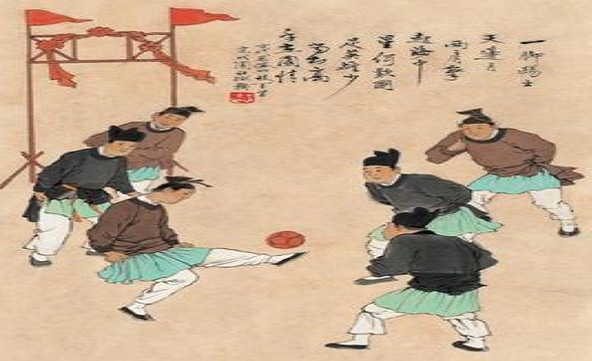
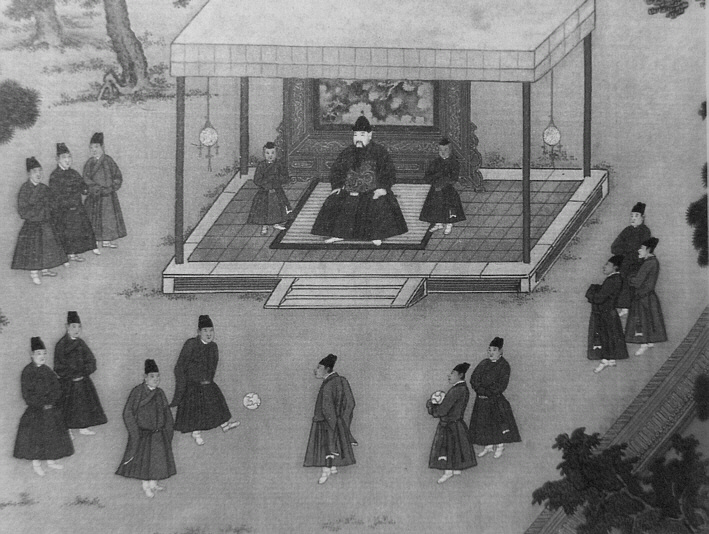
On July 15, 2004, Sepp Blatter, president of FIFA, formally announced to the world that soccer originates in Zibo, Shandong province, China. Not many know that this sport was called Cuju in ancient China.

A leather feather-filled ‘ball-like’ object dribbled by opponents with the intention of kicking it into a the opponent’s net during the Han Dynasty China (221 BC) was a popular sport within the imperial court. According to FIFA: “The very earliest form of the game for which there is scientific evidence was an exercise from a military manual dating back to the second and third centuries BC in China.” The sport was refined during the Tang Dynasty (618-907) and Song Dynasty (960-1279), when professional players would entertain the imperial court and played against the imperial officials. To add excitement and speed to the game the leather ball was filled with air replacing feather providing an afternoon's entertainment for the Emperor and his invited guests.

Saturday, June 22, 2013

Paper money the biggest confidence trick ever invented by the Chinese.

paper money
"FEI QIAN"
KUBLAI KHAN
When the last Emperor of the Song Dynasty in ancient China issued the world's first printed paper money 1,500 years ago he never would have thought that his legacy provides what some would consider as the biggest confidence trick perpetuated by every sovereign government in the modern world.

This slide of hand is called - currency.

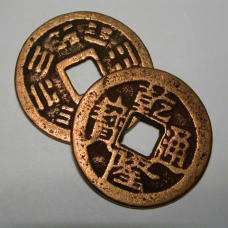
The Emperor introduced the concept of "Fei Qian" - the flying money, perhaps because it was easily blown out of your hands. A picture of 5 copper coins, authenticated by the Royal Imperial Seal block printed on one side of the bark paper was issued. The seal gave this paper its intrinsic value equivalent to the number of coins pictured on the paper. Holders of this paper could redeem their paper money for the real 5 copper coins from any Imperial representative office. Holders could also use this piece of paper as an instrument of payment. The rudimentary central bank and IOU was thus created.

COPPER COINS
Unfortunately the 'lao bai xing' or citizens did not understand nor trust this printed bark representing their hard earned copper coins. The paper's fragility and ease of being stolen further prevented its universal acceptance.

Widespread use and acceptance of "Fei Qian" only happened during the Yuan Dynasty when the Mongol prince, Kublai Khan, the grandson of Genghis Khan issued an edict that all traders must accept his paper money ON PAIN OF DEATH.

With this the first legal tender law, which underpins the currencies of today's sovereign governments, was created. For a currency to achieve widespread usage, acceptance must be universal and Kublai Khan's edict did precisely that.

Sovereign governments today have similarly enacted laws (an edict, that everyone must accept the paper note issued by the Central Bank (Emperor) or you go to jail (on the pain of death). This 'edict' is clearly printed on notes today: the US dollar “this note is legal tender for all debts, public and private”; Canadian dollar “this note is legal tender”; and Australian dollar reads, “This Australian note is legal tender throughout Australia and its territories.”

So where is the confidence trick?

It all started with Kublai Khan, the Mongol Emperor of the Yuan Dynasty immediately after the fall of Song Dynasty.

Kublai Khan needed to replenish his severely depleted treasury after the 10-year war waged against the Song Dynasty.

Noticing that most of the paper money issued by the previous Song Emperor was never redeemed for copper coins he decided to pay his Imperial staff with his own version of paper notes instead of physical copper coins. He then embarked on what would be regarded as the world's first Monetary Policy, he 'bought back' copper coins firstly from his staff and later from the public or 'lao bai xing' by issuing them with paper money. Within 2 short years Kublai Khan collected all and more of the copper he used to wage his war against the Chinese Song Emperor.

His edict "acceptance on pain of death" guaranteed widespread acceptance. Holders of the "Yuan" paper note knew that a recipient must accept payment and if they wished they could redeem physical copper coins from the Imperial representative equivalent to the number of copper coins printed on the note. With this confidence and universal acceptance, demand for paper notes exploded, as it became the preferred means of payment. Kublai Khan's treasury issued even more notes as a result and within a short period the aggregated printed value on all the issued notes far exceeded the value of physical copper coins in Kublai Khan's treasury. Despite this the demand and use of paper notes did not abate.

Just like any of the Governors of the Central Banks of today, Kublai Khan realised the confidence and thus validity of a country's currency was not reliant on the backing of the value of physical commodity behind it. The confidence trick was finally created.

Kublai Khan started this trick and is today used by every country in the world issuing currency.

Today's currency has NO asset backing behind it except the mutual trust depicted by the sovereign government. Even the Gold Standard that supposedly backed every note was abandoned in early 1971 - leaving nothing accept trust of acceptance to back the note. In short we accept currencies simply because we were told to accept it under law even though there is now nothing to back the issue, similar to Kublai Khan's excessive paper money.

The trick simply works this way. John accepts it because he thinks Mary will accept it and she
US CENTRAL BANK
accepts it because she thinks Macdonald's and Kmart will take it. In short the only thing that is backing money is the "greater fool" theory of money - "I accept a dollar note because I think I can pass it along to some dude or idiot"

Little did the Song Emperor realise his "Fei Qian" was to be one of China's most prominent export - a slide of hand accepted and practiced by all Central Bankers in the world today.

Thursday, June 20, 2013

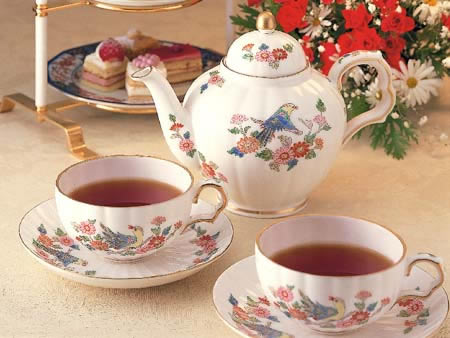
The quintessential English cup of tea - the dark side


tea drinking
The English cup of tea
The 165 million cups of tea per day consumed by the British has a dark side to it and I am not talking about its colour.

This ubiquitous brew, which was known to have changed the "evil" ways of the banished herbalist ShenNong of China after some dried leaves accidentally fell into his boiling hot water 5,000 years ago, has similarly changed the social fabric of Great Britain in the 17th century and beyond. Tea drinking only gained momentum when the Royal Family in 1700, namely Queen Anne, started drinking tea with her breakfast rather than the customary beer. Alcohol in the 1700 was the preferred liquid drunk by men, women and children, instead of the polluted water. With no surprise the dire consequences of such wide-spread alcohol consumption were major social dislocation in 1700 Britain. It was this nationwide adoption of tea drinking that that saved the social fabric of the British society from further deterioration.  

Within 100 years – the demand for tea by the British had grown to such proportions that it severely depleted the silver bullion reserves of the country. Great Britain was running short of silver bullion buying tea, tea wares “China”, silk and other highly demanded goods produced by the Middle Kingdom.

East India Company
The East India Company, given the tea trading monopoly by the government, was charged with solving Britain’s silver bullion crisis. It did not take long for the executives of East India Company to realise that opium from their Indian colonies can be sold into China in exchange for tea thus preserving the fast dwindling silver bullion reserves of Great Britain. Within 50 years, East India Company exported social violence from Great Britain to China creating opium addiction, starvation,  poverty and death to almost 30 million Chinese.

Slaves in the sugarcane plantations
Tea was never drunk with sugar or milk. But the English aristocrats decided to alter the bitter taste of black tea by adding extracts of a giant grass – sugar. The consequence was an international slave trade involving Britain, USA, Africa and the Caribbean. Sugar came from the Caribbean plantations toiled by black African slaves supplied by the Confederate States of America (Southern states of America). Ship loads of slaves bound for the sugarcane plantations criss-crossed the Atlantic with ship loads of tea from China via the Suez Canal.

Queen Anne’s morning cup of tea in the late 1700s had major implications internationally affecting millions of people in a number of countries and culture. So next time someone says “want a cup of tea”, spare a thought for those involved in the darker side of tea.